

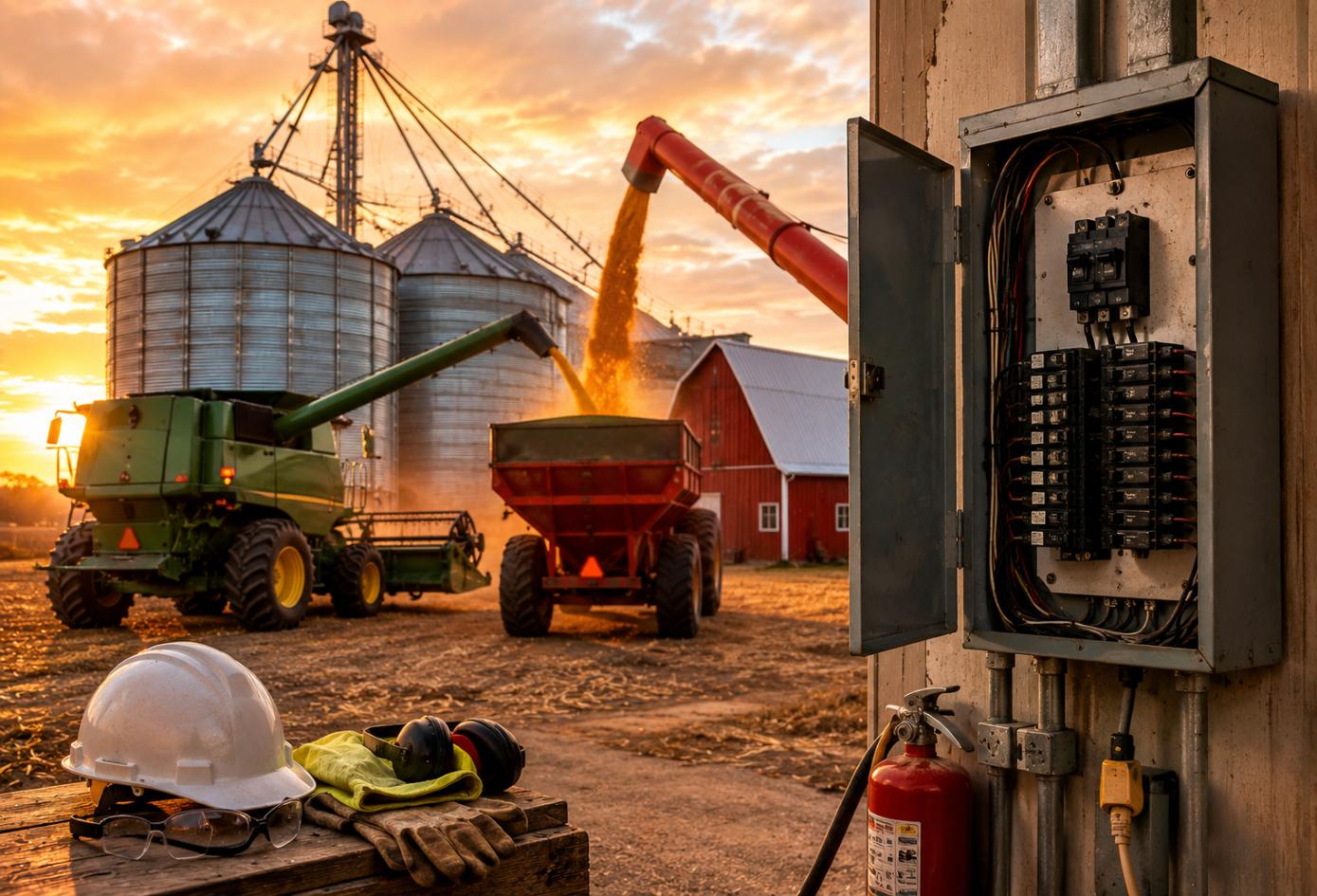
Fall around Estelline means combines moving through fields, grain trucks on local roads, bins filling, and farm electrical systems working hard. At the same time, shorter days and colder weather put additional demands on lighting, heating equipment, shops, garages, and homes.
A safe harvest depends on more than careful equipment operation. Electrical systems, grain-handling equipment, temporary power setups, and outdoor connections all deserve attention before and during the busiest weeks of the season.
Quick answer: Fall electrical safety starts with inspecting wiring, panels, cords, motors, lighting, and grain-handling equipment before harvest activity reaches its peak. Farmers and homeowners should watch for damaged wiring, overloaded circuits, moisture around electrical equipment, unusual heat or odors, and problems with outdoor connections. Grain bins, augers, dryers, elevators, and other powered equipment require extra caution because electrical hazards can combine with moving machinery, dust, and demanding operating schedules.
What local readers should know
-
Grain-handling equipment should be inspected before heavy seasonal use, especially when motors, controls, wiring, and connections have been sitting between harvest seasons.
-
South Dakota wind, moisture, temperature changes, dust, and winter weather can be hard on outdoor electrical components.
-
Extension cords and temporary wiring should never become substitutes for properly installed permanent electrical service.
-
Farms throughout Hamlin County should keep electrical safety in mind around grain bins, augers, shops, machine sheds, and outdoor work areas.
-
Electrical warning signs should be addressed before a small problem becomes an outage or safety concern during harvest.
Why Does Fall Electrical Safety Matter Around Estelline?
Fall electrical safety matters around Estelline because harvest combines long operating hours, grain dust, moving machinery, outdoor electrical equipment, and changing South Dakota weather. Equipment that worked normally during a quieter part of the year can experience heavier loads once grain-handling systems, shop equipment, lighting, heaters, and other seasonal electrical demands are operating together.
For farms around Hamlin County, fall can mean long days moving grain from the field to storage. Motors may run for extended periods, outdoor receptacles are exposed to the elements, and equipment is often used after dark.
Homes face seasonal changes too. Residents may begin using electric heaters, garage equipment, exterior lighting, and other cold-weather electrical loads as temperatures drop.
Ron’s Electric, Inc. understands that reliable power matters during busy seasons. We help local property owners identify electrical concerns and determine when equipment, wiring, panels, or connections need professional attention.
What Should Farmers Inspect Before Grain Starts Moving?
Farmers should inspect the electrical components serving grain bins, augers, dryers, conveyors, lighting, and other grain-handling equipment before relying on them for harvest. The goal is to find visible damage, deterioration, overheating, or unreliable operation while there is still time to address the problem safely.
A practical pre-harvest electrical check can include looking for damaged conduit, cracked covers, loose-looking components, exposed wiring, worn cords, and signs of moisture intrusion. Operators should also pay attention to motors or electrical equipment that sound, smell, or operate differently than expected.
Grain-handling environments require particular caution. Grain dust, moving components, elevated work areas, and powered machinery can create multiple hazards at once. Electrical troubleshooting or repair should not be attempted while equipment is energized.
What Electrical Warning Signs Should Estelline Property Owners Watch For?
Electrical warning signs include repeated breaker trips, flickering lights, hot or discolored components, burning odors, damaged wiring, buzzing equipment, and motors that operate abnormally. Around Estelline farms and homes, these symptoms deserve attention before fall workloads and colder temperatures increase electrical demand.
Watch for:
-
Breakers that repeatedly trip when equipment starts or operates.
-
Lights that dim or flicker when a motor or large appliance turns on.
-
Receptacles, switches, panels, or electrical equipment that feel unusually warm.
-
Burning or overheated odors near wiring, motors, panels, or controls.
-
Cracked insulation, damaged cords, exposed conductors, or deteriorated conduit.
-
Buzzing, popping, or crackling from electrical equipment.
-
Motors that struggle to start, shut down unexpectedly, or operate differently than usual.
-
Outdoor electrical boxes or connections showing visible moisture or physical damage.
Do not remove covers or reach inside energized electrical equipment to investigate a warning sign.
When Should You Call an Electrician?
You should call an electrician when an electrical problem involves damaged permanent wiring, recurring breaker trips, panel concerns, overheating, exposed conductors, unreliable motors, or equipment that cannot be safely inspected from the outside. Property owners can perform visual checks, but diagnosis and repair of energized or permanent electrical systems should be left to qualified professionals.
This threshold becomes especially important during harvest. A temporary workaround may seem convenient when grain needs to move, but improvised wiring or repeatedly resetting a breaker without identifying the cause can introduce additional risk.
For local farms between Estelline, Castlewood, and the surrounding agricultural areas, addressing known electrical issues before the busiest harvest days can also reduce the chance of discovering a problem when equipment is urgently needed.
What Common Fall Conditions Can Cause Electrical Problems?
Common fall electrical problems can result from weather exposure, equipment wear, heavy seasonal loads, damaged cords, moisture, dust, and electrical components that have deteriorated since their last period of regular use. South Dakota’s changing seasons make pre-harvest and pre-winter inspections particularly useful.
Outdoor equipment experiences temperature swings, wind, precipitation, and physical wear. Farm wiring may also be located where machinery, rodents, dust, vibration, or stored materials can affect electrical components.
Heavy seasonal use is another concern. A circuit or connection that appears normal under a light load may show symptoms once motors and equipment operate for longer periods.
Around Lake Poinsett and the broader Hamlin County area, fall weather can change quickly. Electrical enclosures, receptacles, cords, and equipment used outdoors should be appropriate for their location and kept in good condition.
How Can Farms and Homes Prepare Their Electrical Systems for Fall?
Farms and homes can prepare for fall by completing visual electrical checks, testing equipment before peak use, keeping panels accessible, replacing damaged cords, and scheduling professional service for problems involving permanent wiring or electrical equipment. The best time to find a harvest-related electrical issue is before the equipment is needed continuously.
Farm operators can walk through grain-handling and shop areas before harvest. Look at accessible wiring, disconnects, lighting, receptacles, cords, and equipment for obvious physical damage.
Homeowners can perform a similar seasonal check around garages, workshops, exterior lighting, and outdoor receptacles. Avoid plugging multiple high-demand devices into an arrangement that was not designed for the load.
DIY inspection should stop at the point where electrical equipment must be opened, wiring must be modified, or a recurring problem needs diagnosis.
What Results Can You Expect From Professional Electrical Service?
Professional electrical service can identify the source of electrical symptoms, determine whether components require repair or replacement, and help restore equipment to safe, reliable operation. The exact work depends on the system, its condition, the electrical load involved, and the cause of the problem.
For a grain-handling system, service might involve evaluating the electrical supply, controls, connections, motors, or related components. For a home or shop, the concern may involve a circuit, receptacle, lighting system, panel, or outdoor electrical equipment.
The goal is not simply to make a symptom disappear. It is to determine why the problem is occurring and what corrective work is appropriate.
What Electrical Safety Mistakes Should Local Property Owners Avoid?
The most common electrical safety mistakes involve ignoring warning signs, relying on temporary wiring too long, repeatedly resetting breakers, and attempting repairs without properly controlling electrical hazards. During a busy Estelline harvest, convenience should not take priority over safe electrical practices.
Mistake: Repeatedly resetting a breaker that continues to trip.
Consequence: The underlying electrical problem remains unidentified.
Better approach: Stop using the affected equipment and have the cause evaluated.
Mistake: Using damaged extension cords because harvest is underway.
Consequence: Damaged insulation or connections can create electrical hazards.
Better approach: Remove damaged cords from service and use suitable equipment.
Mistake: Treating temporary power as a permanent solution.
Consequence: The setup may not be appropriate for long-term loads or environmental exposure.
Better approach: Have permanent electrical needs properly evaluated.
What Is a Common Local Harvest Scenario?
A common local scenario is a grain-handling motor or circuit that operates normally during initial testing but begins showing problems once harvest brings longer run times and heavier demand. This does not automatically identify the cause, but it is a reason to stop and investigate rather than continue forcing the equipment to operate.
The same pattern can occur in machine sheds and workshops when lighting, tools, heaters, compressors, or other equipment begin operating more frequently.
Catching those symptoms early gives property owners an opportunity to address the electrical issue before winter weather or peak harvest activity makes service more disruptive.
Which Electrical Services Can Help During Harvest and Fall?
Electrical inspection, troubleshooting, repair, and properly planned electrical improvements can help address fall power concerns in homes, shops, farms, and grain-handling areas. The right solution depends on whether the problem involves existing wiring, electrical distribution, equipment connections, lighting, controls, or another part of the system.
We can help evaluate electrical concerns and discuss appropriate options for the property and equipment involved.
Is DIY Inspection or Professional Electrical Service the Better Option?
DIY inspection is appropriate for visible, non-invasive checks, while electrical diagnosis, permanent wiring work, and repairs involving energized components should be handled professionally. Local farmers and homeowners can play an important role by noticing changes early without putting themselves at unnecessary risk.
A property owner can look for damaged cords, broken covers, unusual equipment behavior, and other visible warning signs. Professional service becomes appropriate when determining the cause requires testing, opening electrical equipment, modifying wiring, or replacing permanent electrical components.
What Areas Can Benefit From Fall Electrical Preparation?
Fall electrical preparation is useful throughout Estelline and the surrounding Hamlin County agricultural area, particularly for farms, rural homes, workshops, machine sheds, and grain-storage properties. Nearby communities such as Castlewood and Hayti experience many of the same seasonal demands associated with harvest and South Dakota’s transition toward winter.
Electrical preparation is also valuable for properties throughout the Lake Poinsett area where outdoor equipment and seasonal weather exposure can affect electrical systems.
What Can Happen If Electrical Problems Are Ignored?
Ignoring electrical problems can lead to unreliable equipment, unexpected shutdowns, damaged components, lost work time, and increased safety concerns. During harvest near Estelline, even a relatively small electrical symptom can become more disruptive when equipment is operating for long periods and schedules depend on keeping grain moving.
Waiting can also push necessary electrical work into colder weather, when outdoor repairs and farm operations may be less convenient.
FAQ
Should I have grain-handling electrical equipment checked before harvest in Estelline?
Yes, checking grain-handling electrical equipment before harvest can help identify visible damage or operating problems before equipment enters heavy seasonal use. Inspect accessible cords, wiring, enclosures, controls, and equipment without opening energized components. If you notice overheating, repeated breaker trips, damaged wiring, or abnormal motor operation, arrange professional evaluation.
What electrical problems are most concerning during a South Dakota harvest?
Overheating, damaged wiring, repeated breaker trips, exposed conductors, unreliable motors, and moisture around electrical components are all concerns during harvest. Grain dust, moving machinery, long operating hours, and outdoor conditions can make electrical problems more complicated, so unusual symptoms should be investigated instead of ignored.
Can I keep resetting a breaker if my grain equipment still runs?
No, a breaker that repeatedly trips should not simply be reset over and over. Repeated tripping indicates that the circuit or equipment needs attention. Stop using the affected equipment and have the cause identified rather than assuming the breaker itself is the problem.
How should Estelline homeowners prepare electrical systems for colder weather?
Estelline homeowners can start by checking exterior lighting, accessible receptacles, garage equipment, cords, and other electrical components used more often in fall and winter. Pay attention to flickering, overheating, unusual odors, damaged components, or repeated breaker trips. Problems involving permanent wiring or electrical panels should receive professional attention.
Are extension cords suitable for permanent farm electrical equipment?
Extension cords should not be treated as replacements for properly installed permanent wiring. Temporary cords can also become damaged by traffic, equipment, weather, or repeated handling. Farm equipment that regularly requires power in a fixed location should have its electrical needs evaluated so an appropriate permanent solution can be considered.
Why does fall weather matter for electrical equipment in Hamlin County?
Fall weather matters because outdoor electrical equipment can experience moisture, wind, temperature changes, and physical exposure as South Dakota moves toward winter. Seasonal conditions can reveal deterioration in enclosures, cords, connections, and other components. A visual inspection before harsh winter weather arrives can help uncover obvious concerns.
What should I do if I smell something burning near electrical equipment?
Stop using the affected equipment if you can do so safely and arrange for the problem to be evaluated. A burning or overheated odor can indicate an electrical or equipment problem that should not be ignored. Do not open energized equipment or attempt internal repairs to locate the source yourself.
When is the best time for an electrical check on an Estelline farm?
Before peak harvest and before severe winter weather are practical times to review farm electrical systems. Testing equipment early provides an opportunity to notice problems before grain-handling systems are needed continuously. Another seasonal check can focus on shops, lighting, heating-related electrical loads, and outdoor equipment before winter conditions settle into the region.
Keep Your Estelline Farm or Home Ready for Harvest and Winter
Fall puts electrical systems to work across local farms, homes, shops, and grain-handling operations. Watching for warning signs and dealing with electrical problems early can help property owners enter harvest and the colder months with greater confidence.
Protect Your Power Before the Busy Season Peaks
We are ready to help local property owners address electrical concerns before they become bigger disruptions during harvest or winter.