
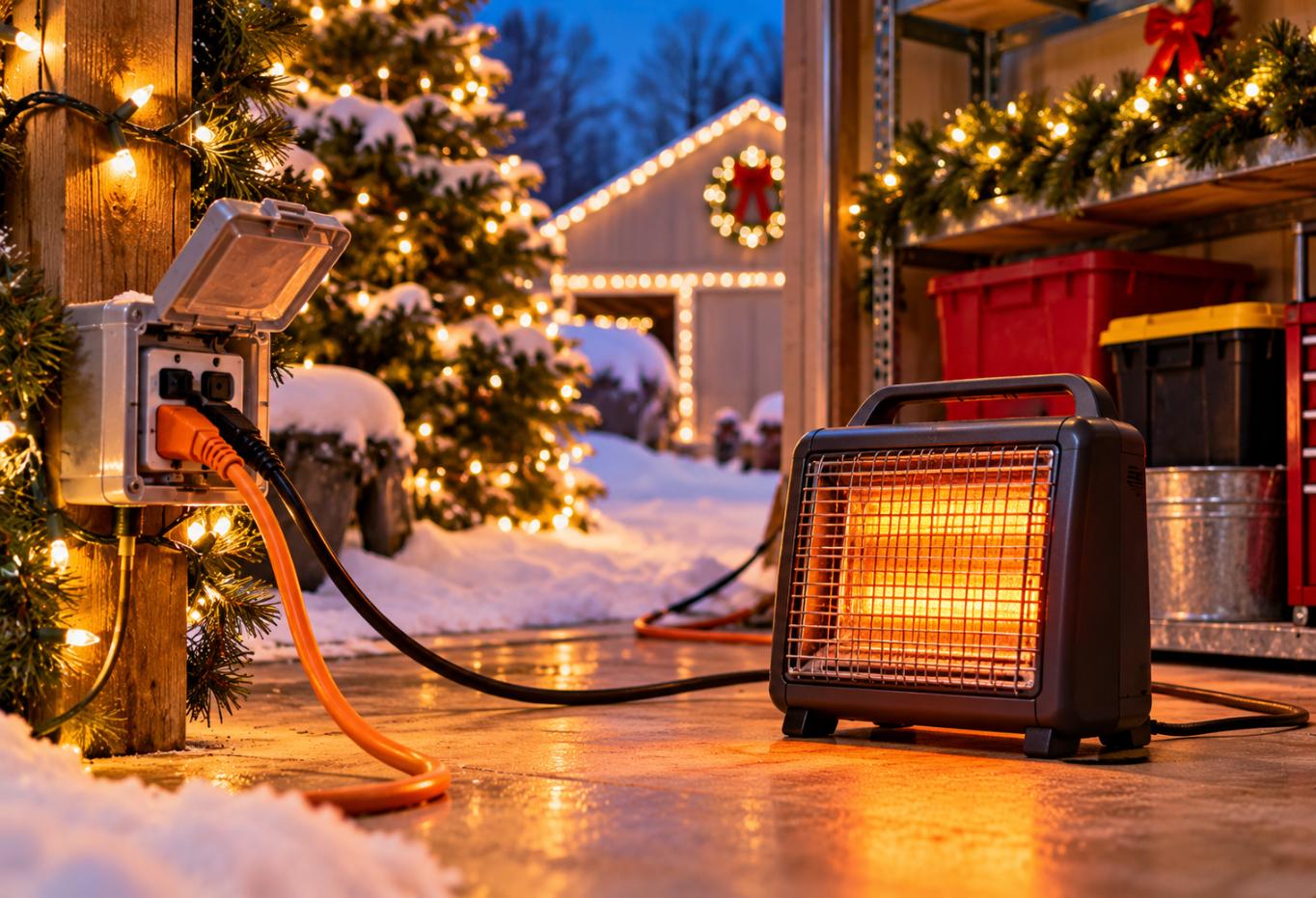
When winter arrives in Estelline, holiday lights brighten homes while portable space heaters help keep chilly rooms comfortable. But plugging in extra electrical devices can put unexpected strain on household circuits, especially in older homes or rooms with limited outlets.
Understanding circuit safety before South Dakota’s coldest weather arrives can help homeowners enjoy the holidays without unnecessary electrical hazards.
Quick Answer: Holiday lights and space heaters can create electrical safety risks when they overload circuits, rely on extension cords, or share outlets with other high-wattage appliances. In Estelline, homeowners should plug space heaters directly into wall outlets, follow manufacturer instructions for holiday lighting, and watch for tripped breakers, warm outlets, or flickering lights. If a circuit repeatedly trips or shows signs of overheating, a licensed electrician should evaluate the electrical system.
What Estelline Homeowners Should Know
-
Space heaters draw significant power. A typical 1,500-watt heater uses approximately 12.5 amps on a 120-volt circuit, leaving limited capacity for other devices.
-
Holiday decorations add electrical demand. Multiple light strings, illuminated decorations, and extension cords can increase the load on circuits throughout the home.
-
South Dakota winters increase heater use. During cold stretches in Hamlin County, portable heaters may operate for extended periods, making safe electrical connections especially important.
-
Older homes may have limited circuit capacity. Some properties around Estelline and nearby communities have electrical layouts that were not designed for today’s combination of appliances and seasonal decorations.
-
Circuit breakers are essential safety devices. A repeatedly tripping breaker should never be ignored or replaced with a higher-rated breaker without professional evaluation.
Local Data or Field Observations: Winter Electrical Demands in Estelline
Winter electrical demands in Estelline can increase when homeowners combine seasonal decorations, portable heating equipment, and everyday household appliances. Cold temperatures, shorter daylight hours, and holiday gatherings can result in several electrical devices operating simultaneously.
South Dakota’s winter climate makes supplemental heating particularly appealing in bedrooms, home offices, basements, and other areas that feel colder than the rest of the house.
A standard 15-amp, 120-volt circuit has a nominal capacity of 1,800 watts. For continuous loads, commonly applicable electrical code rules limit the load to 80% of that rating, or 1,440 watts. A 1,500-watt space heater can therefore consume most of a circuit’s practical capacity and may require careful evaluation of its instructions, operating duration, and circuit arrangement.
At Ron’s Electric, Inc., we encourage homeowners to consider the total electrical demand on a circuit rather than assuming that an available outlet automatically means additional capacity is available.
Local Impact: Why Overloaded Circuits Matter During South Dakota Winters
Overloaded circuits can affect household safety, heating reliability, and electrical equipment performance during Estelline’s cold winter months.
A tripped breaker might seem like a minor inconvenience, but it can interrupt heating equipment, lighting, or other essential appliances. Repeated overloading can also reveal problems with outlets, wiring connections, or the electrical panel.
For homeowners in Hamlin County, winter conditions can make electrical interruptions particularly inconvenient. A power problem during a holiday gathering or overnight cold spell may require prompt attention.
The greatest concern is overheating. Damaged wiring connections, improperly used extension cords, and overloaded equipment can create fire hazards even when a circuit breaker appears to be functioning.
Warning Signs of Holiday Electrical Circuit Problems
Warning signs of electrical circuit problems include repeated breaker trips, unusual heat, burning odors, and changes in lighting performance. Estelline homeowners should recognize these symptoms before continuing to use holiday decorations or portable heaters.
Watch for these seven signs:
-
Frequently tripping breakers: A breaker shuts off when a space heater and other appliances operate together.
-
Flickering or dimming lights: Holiday lights noticeably dim when a heater starts or changes operating modes.
-
Warm or discolored outlets: Receptacles or plug connections feel unusually hot or show browning.
-
Burning or melting smells: An outlet, power cord, or electrical panel produces an unusual odor.
-
Buzzing or crackling sounds: Electrical connections make noises that may indicate arcing or loose components.
-
Damaged extension cords: Cords show fraying, cracked insulation, exposed conductors, or melted areas.
-
Unreliable electrical equipment: Devices shut off unexpectedly or lose power when multiple items are connected.
A burning smell, smoke, visible sparking, or a hot outlet requires immediate attention. Stop using the affected equipment if it is safe to do so, and arrange professional assistance. If there is smoke or an active fire, evacuate and call emergency services.
When to Call a Professional Electrician
Homeowners should call a professional electrician when holiday lighting or space heater use causes recurring breaker trips, overheating, unusual electrical sounds, or visible outlet damage.
A single breaker trip may result from temporarily exceeding a circuit’s capacity. However, repeatedly resetting a breaker without identifying the cause can leave a dangerous condition unresolved.
In Estelline, professional electrical evaluation is especially worthwhile when a home has older wiring, limited receptacles, or rooms that regularly depend on supplemental heat.
We can help homeowners evaluate circuit capacity, identify electrical concerns, and determine whether repairs or additional circuits are appropriate.
Never remove electrical panel covers, replace breakers with higher-rated models, or attempt wiring repairs without the necessary qualifications.
Common Local Causes of Circuit Overloads
The most common causes of holiday circuit overloads are high-wattage heaters, too many connected decorations, and multiple appliances sharing the same branch circuit.
1. High-Wattage Space Heaters
Portable electric heaters frequently use 750 to 1,500 watts. A heater operating at its highest setting can consume a substantial portion of a household circuit’s capacity.
During freezing weather in eastern South Dakota, prolonged heater operation makes proper outlet and circuit selection especially important.
2. Too Many Holiday Light Strings
Holiday lights can create problems when homeowners connect more strings than the manufacturer allows or combine lighting with other high-demand equipment.
LED holiday lights generally use less electricity than traditional incandescent decorations, but installation instructions and electrical ratings still matter.
3. Shared Circuits in Older Homes
A single branch circuit may supply several outlets in different parts of a house.
In older properties around Lake Poinsett and Estelline, homeowners should not assume that outlets in separate rooms are connected to separate breakers.
4. Improper Extension Cord Use
Extension cords and power strips are particularly risky when used with portable space heaters.
A heater should connect directly to a suitable wall receptacle, not an extension cord, power strip, or plug adapter.
5. Loose or Deteriorated Connections
A worn receptacle or loose electrical connection can generate excessive heat.
These conditions may become noticeable when winter appliances place additional demand on the electrical system.
Prevention and Maintenance: Safer Holiday Electrical Habits
Preventing holiday electrical problems starts with separating high-demand appliances, inspecting decorations, and keeping cords and outlets in good condition.
Before decorating your Estelline home, follow these practical precautions:
-
Plug portable space heaters directly into wall outlets and follow their operating instructions.
-
Avoid operating other high-wattage appliances on the same circuit as a space heater.
-
Keep heaters at least three feet from curtains, furniture, bedding, decorations, and other combustible materials.
-
Turn portable heaters off before leaving the room or going to sleep.
-
Inspect holiday light strings for cracked insulation, damaged sockets, and loose connections.
-
Use outdoor-rated lights and extension cords for exterior decorations.
-
Follow manufacturer limits for connecting multiple light strings.
-
Keep outdoor electrical connections protected from snow, ice, and moisture using equipment and arrangements rated for those conditions.
-
Use appropriate GFCI protection for outdoor receptacles and other locations where required.
October and November are useful times to inspect decorations and address outlet problems before holiday lighting and winter heating needs increase.
If you notice loose receptacles, repeated breaker trips, or damaged wiring, stop using the affected equipment and contact a qualified electrician.
Expected Results From Professional Circuit Safety Service
Professional circuit safety service can help Estelline homeowners identify overloaded circuits, damaged receptacles, unsafe connections, and electrical limitations before they cause additional problems.
Depending on the home’s condition, an electrician may recommend outlet repairs, wiring corrections, dedicated circuits, or electrical panel improvements.
A dedicated circuit for a frequently used high-wattage appliance can reduce competition with other electrical devices. However, the appropriate solution depends on the equipment, existing wiring, circuit ratings, and applicable electrical codes.
An inspection does not guarantee that future electrical problems will never occur, but it can provide a clearer understanding of the system’s condition and the improvements needed.
Common Mistakes Estelline Homeowners Should Avoid
Common electrical mistakes during the holiday season involve unsafe heater connections, excessive lighting loads, and attempts to work around tripping breakers.
Mistake: Plugging a space heater into a power strip.
Consequence: The strip or its connections may overheat under a sustained high electrical load.
Better approach: Connect the heater directly to an appropriate wall outlet.
Mistake: Assuming LED lights cannot overload a circuit.
Consequence: Multiple decorations and appliances can still exceed circuit capacity.
Better approach: Check equipment ratings and manufacturer connection limits.
Mistake: Resetting a breaker repeatedly.
Consequence: An underlying overload or wiring defect remains unresolved.
Better approach: Disconnect the suspected load and arrange an electrical evaluation if the problem continues.
Mistake: Running cords beneath rugs or through doorways.
Consequence: Hidden damage, trapped heat, and physical wear can create electrical hazards.
Better approach: Use properly located outlets and safe, manufacturer-approved cord arrangements.
Common Local Scenario: Holiday Decorations and a Cold Living Room
A common winter scenario in Estelline involves a family decorating the living room while using a portable heater to warm a drafty area.
The room has holiday lights, a television, and several everyday electronics. When a 1,500-watt space heater is switched on, the circuit breaker trips.
The homeowner may assume that the holiday lights caused the problem. However, the heater’s substantial electrical demand, combined with other connected equipment, may have exceeded the circuit rating.
The safest response is to disconnect the heater and avoid repeatedly resetting the breaker. A qualified electrician can determine whether the issue is a simple overload or an underlying electrical defect.
This is an illustrative scenario, not a documented customer project.
Related Service Solutions for Winter Circuit Safety
Electrical inspections, receptacle repairs, dedicated circuit installation, and panel evaluations can help address winter circuit safety concerns in Estelline homes.
Depending on the findings, useful electrical services may include:
-
Circuit load evaluations to determine whether existing circuits can safely support connected appliances.
-
Outlet and receptacle repairs to correct damaged, loose, or deteriorated connections.
-
Dedicated circuit installation for equipment requiring separate electrical capacity.
-
Electrical panel assessments to identify breaker problems or system limitations.
-
GFCI protection improvements for outdoor and other applicable locations.
We can help determine which improvements are appropriate for a home’s existing electrical system and planned winter use.
Comparing Your Options: Simple Checks vs. Professional Repairs
Homeowners can safely inspect visible cords, read equipment labels, and reduce unnecessary electrical loads. Professional service is appropriate when the problem involves wiring, breakers, receptacles, or circuit capacity.
| Situation | Recommended Approach |
|---|---|
| Damaged holiday light string | Unplug and replace the damaged string. |
| Space heater connected to a power strip | Disconnect it and use an appropriate wall outlet. |
| Breaker trips repeatedly | Stop using the affected load and contact an electrician. |
| Outlet feels hot or smells burned | Stop using it and request professional evaluation. |
| Not enough outlets for winter appliances | Ask about properly installed additional receptacles or circuits. |
| Older panel with recurring problems | Schedule an electrical assessment. |
The goal is to resolve the cause of the problem rather than rely on temporary workarounds.
Service Areas: Estelline and Nearby Communities
Homeowners in Estelline and surrounding Hamlin County communities, including areas near Lake Poinsett, Castlewood, and Lake Norden, experience many of the same winter electrical safety concerns.
For service availability in a particular community, contact our team to confirm coverage before scheduling.
Cost of Ignoring Circuit Safety Problems
Ignoring circuit safety problems can increase the likelihood of equipment damage, electrical interruptions, and overheating.
A repeatedly tripping breaker may indicate that an appliance is drawing more power than the circuit can safely supply. Damaged outlets and loose connections can present additional risks that are not always visible.
For South Dakota homeowners, resolving electrical concerns before extended periods of freezing weather can help reduce avoidable interruptions when dependable household power matters most.
Frequently Asked Questions About Holiday Electrical Safety in Estelline
Can I plug holiday lights and a space heater into the same outlet?
It is generally best to avoid plugging holiday lights and a space heater into the same outlet or circuit. A typical 1,500-watt heater draws approximately 12.5 amps at 120 volts. Adding decorations or other devices can create an overload, depending on the circuit rating and total connected load.
Why does my breaker trip when I turn on a space heater in Estelline?
A breaker may trip because the space heater and other connected devices exceed the circuit’s capacity. In Estelline homes, this can occur when supplemental heating shares a circuit with lighting, televisions, or other appliances. Repeated trips can also indicate wiring or equipment defects that require professional evaluation.
Are LED Christmas lights safer for older Hamlin County homes?
LED Christmas lights generally use less electricity and produce less heat than comparable traditional incandescent light strings. However, they do not eliminate electrical hazards. Homeowners in Hamlin County should still inspect cords, follow connection limits, use properly rated decorations, and avoid overloading outlets or circuits.
Should my space heater have its own electrical circuit?
A space heater may benefit from a dedicated circuit, particularly when it operates at high wattage for extended periods. The need depends on the heater’s instructions, circuit rating, existing loads, and wiring configuration. An electrician can evaluate whether a dedicated circuit is appropriate for your home.
Can I use an extension cord for outdoor holiday lights during South Dakota winters?
Yes, a properly rated outdoor extension cord can be used for compatible holiday lighting when permitted by the equipment manufacturer’s instructions. Choose a cord suitable for the connected load and outdoor conditions. Keep connections protected from moisture, avoid damaged cords, and use GFCI-protected outlets where required.
Do older homes in Estelline need electrical panel upgrades for holiday decorations?
Not necessarily. An older electrical panel does not automatically need replacement because holiday decorations are installed. However, limited circuit capacity, recurring breaker trips, damaged equipment, or other deficiencies may justify professional evaluation. The appropriate recommendation depends on the condition and capacity of the existing electrical system.
What should I do if an electrical outlet feels warm while using a heater?
Stop using the outlet if it feels unusually warm or hot, particularly if there is discoloration, a burning smell, or a loose plug connection. Unplug the heater only if it is safe to do so. Have a qualified electrician inspect the receptacle and associated wiring before using it again.
When should Estelline homeowners schedule a winter electrical safety inspection?
Early fall is a practical time to schedule an electrical safety inspection before holiday decorations and supplemental heating increase household electrical demand. However, warning signs such as recurring breaker trips, hot outlets, or burning odors should be addressed promptly, regardless of the season.
Keep Your Estelline Home Safe and Comfortable This Holiday Season
Holiday lights and space heaters can make winter more enjoyable, but both deserve careful attention to electrical safety. Understanding circuit capacity, using equipment correctly, and recognizing warning signs can help reduce preventable electrical hazards.
Whether you are decorating for the holidays or preparing for another cold South Dakota winter, addressing electrical concerns early can make a meaningful difference.
Protect Your Home With Safer, More Reliable Electrical Circuits
At Ron’s Electric, Inc., we can help you explore electrical safety concerns and appropriate solutions for your home.